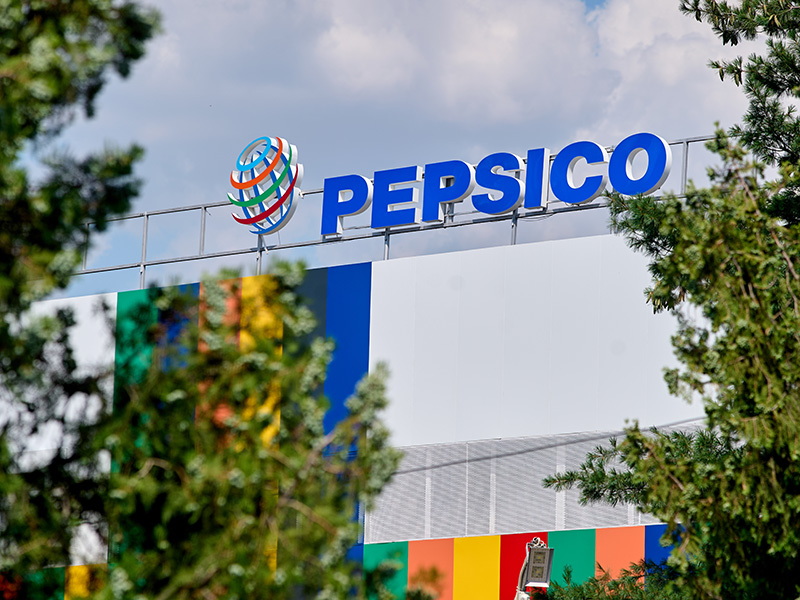
PepsiCo has revised several key sustainability goals across climate, packaging, agriculture, and water, citing global infrastructural and policy challenges as central reasons for the adjustments. Among the most significant changes, the company has pushed its net zero greenhouse gas (GHG) emissions target from 2040 to 2050.
The decision, announced in May, reflects what PepsiCo describes as “external realities” hindering faster progress. These include fragmented recycling and reuse infrastructure, uneven government regulations, limited availability of electric vehicle (EV) charging networks, and the high cost of EV fleets.
“We know it’s important that we continue to be transparent about our progress – both our successes and the challenges – and the dynamic realities that our company and the broader industry face today,” said Jim Andrew, Executive Vice President and Chief Sustainability Officer at PepsiCo.
Revised Climate Commitments
Alongside the postponed net zero timeline, PepsiCo has recalibrated its interim climate goals. The company now aims for a 50% reduction in Scope 1 and 2 emissions by 2030, using 2022 as the baseline, instead of a 75% cut from 2015 levels. Scope 3 targets have also shifted: Energy & Industry (E&I) emissions are now expected to decline by 42% and Forests, Land, and Agriculture (FLAG) emissions by 30% by 2030, both from a 2022 baseline. Previously, both had targeted 40% reductions from 2015.
Despite the revisions, PepsiCo maintains that its updated goals remain aligned with the Science Based Targets initiative (SBTi) and the broader ambition of limiting global warming to 1.5°C.
Packaging Goals Downgraded but Maintained
In the packaging space, PepsiCo has abandoned several earlier ambitions in favour of more incremental, flexible benchmarks. The company now targets a 2% annual reduction in virgin plastic tonnage (non-renewable origin) through 2030, with a narrowed focus on primary plastic packaging in key markets. Its previous goal of a 20% absolute reduction by 2030 has been retired.
Additionally, the company revised its recycled content target: from using 50% recycled material in plastic packaging by 2030, to 40% or more by 2035. A notable rollback is PepsiCo’s decision to retire its objective of delivering 20% of beverage servings in reusable formats by 2030. However, it reaffirms a broader ambition that 97% of its packaging—primary and secondary—will be reusable, recyclable, or compostable by design by the end of this decade.
The announcement follows a similar retreat by Coca-Cola in late 2024, suggesting industry-wide challenges in scaling circular packaging solutions amid lagging infrastructure and consumer uptake.
Agricultural and Water Goals Intensified
While emissions and packaging targets were scaled back, PepsiCo has expanded its regenerative agriculture initiative. The new goal is to implement regenerative, restorative, or protective practices across 10 million acres of farmland by 2030—up from the previous target of 7 million acres. The company has also maintained its “water positive” goal for 2030, with updated focus on high-risk geographic areas.
“Our sustainability journey will not always be linear,” Andrew said. “But we are focused on doing the work that can both strengthen our business resilience and support a positive impact for the planet. All while remaining agile in our approach, applying learnings across our operations, and sharing them with others to help create a more sustainable food system.”
The updated strategy underlines a growing industry trend toward adjusting ESG targets in line with what companies describe as practical limitations, while still maintaining long-term environmental commitments.