PackworldUSA is positioning its PW3400 and PW3300 Series heat sealers at contract packaging operations that need to manage frequent product changeovers, multiple film structures and validated sealing performance across short-run, high-mix jobs.
The company said the two machine series are designed to help contract packagers maintain repeatable seals across a broad range of materials and package formats while reducing setup complexity and downtime. The positioning reflects a common challenge in outsourced packaging environments, where operators may switch rapidly between customer specifications, pack sizes and film types while still needing consistent seal quality and traceability.
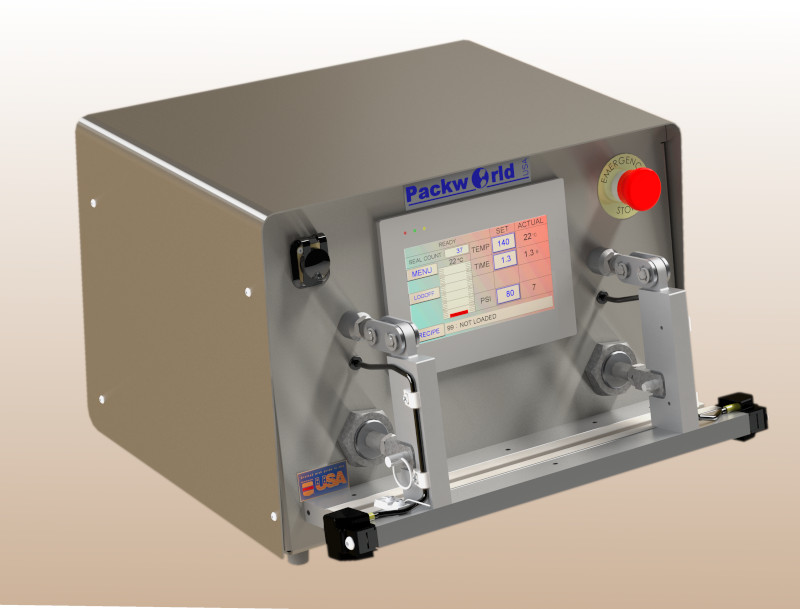
Both the PW3400 and PW3300 include touchscreen controls with on-screen diagnostics, calibration functions and recipe storage intended to let operators recall settings by product, film or customer. In practical terms, that gives contract packagers a way to standardise proven seal parameters and reduce the risk of operator error during changeovers. PackworldUSA also said interchangeable jaw bars allow faster replacement of consumables or changes in sealing configuration.
The machines are offered with standard seal bar lengths of 16 or 24 inches, with custom lengths from 12 to 30 inches, and seal widths from 2 mm to 12 mm. That range is intended to give contract manufacturers flexibility to handle smaller pouches as well as larger bags on the same platform, while adapting the seal format to customer requirements.
Mobility and layout flexibility are another part of the company’s pitch to contract packagers. The PW3400 and PW3300 can be used as tabletop units or fitted to an adjustable stand with tilt capability and lockable casters, allowing sealing stations to be moved as production needs shift. PackworldUSA said close access to the sealing area supports low-headspace packaging, which can help reduce material use and improve final pack presentation. Side-to-side film pass-through and removable seal bars are also intended to support rapid reconfiguration.
A key feature highlighted by the manufacturer is the breadth of materials the two systems can process. According to PackworldUSA, both series can seal mono- and multi-layer films including polyethylene, polypropylene, Tyvek, laminated foils, non-wovens and fluoropolymer materials such as FEP, PFA and PTFE. That material flexibility is particularly relevant for contract packagers, which often need to work across a wider mix of packaging substrates than in-house production lines dedicated to a smaller product portfolio.
Optional features are aimed at improving performance on more demanding applications. Dual jaw heating applies heat from both sides of the film and is intended to reduce cycle times for thicker or higher-temperature materials. Optional water cooling is designed to help maintain shorter cycle times at elevated temperatures, which could support higher throughput on jobs where sealing speed is critical. The company also said its on-demand heating activates sealing elements only during the cycle, while startup takes less than a minute and cooldown is rapid, reducing delays during maintenance or equipment adjustments.
For regulated production environments, PackworldUSA is emphasising data and validation functions. The company said both series can be equipped with data logging, lot code recording and batch counting to support traceability, while configurable user security helps protect validated settings. Construction in stainless steel and anodised aluminium, combined with a fanless, pressure-activated touchscreen, is intended to support cleanroom use and gloved operation in controlled environments.
PackworldUSA also pointed to its TOSS Technology as a differentiating feature, saying it supports high seal-to-seal and machine-to-machine repeatability. For contract packagers serving medical, industrial or other tightly specified applications, repeatability between runs and across equipment can be an important factor in reducing rework and maintaining validation status.
While the two platforms share many core capabilities, PackworldUSA is positioning them for different operational needs. The PW3400 uses horizontal film loading, which the company said can integrate more easily into existing layouts and accommodate a wide range of pouch and bag styles. It is also available with optional vacuum and purge capability.
The PW3300, by contrast, uses vertical film loading and is being targeted at applications involving flowable products, where allowing contents to settle during sealing can support cleaner pack presentation and more consistent sealing results. PackworldUSA added that pinned jaw bars provide quick access for consumable replacement and seal bar adjustment during changeovers.
Taken together, the two systems reflect a packaging equipment strategy centred on flexibility, process control and validation support rather than single-format speed. For contract packagers under pressure to handle increasingly diverse job requirements without sacrificing consistency, that combination is likely to remain a central purchasing criterion.