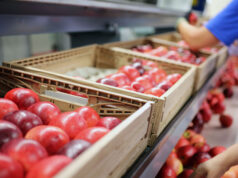
Scion explores agricultural byproducts such as blueberry pomace and avocado stones to enhance moulded fibre trays for food packaging.
A research initiative in New Zealand is investigating how agricultural waste—from blueberry pomace to avocado stones and surplus cabbage leaves—can be converted into sustainable, compostable packaging solutions. The project, led by public research organisation Scion, is supported by the Ministry of Business, Innovation and Employment’s Bioresource Processing Alliance (BPA).
With global demand for fibre-based alternatives to plastic packaging on the rise, Scion’s research team is experimenting with ways to integrate diverse biomass streams into moulded fibre trays. The goal is to enhance the performance characteristics of fibre packaging, particularly moisture resistance and structural integrity, using residues from local agricultural processes.
“We’ve looked at all sorts of different biomasses out there, across waste streams that are coming out of different New Zealand industries,” explained Kate Parker, who leads the project at Scion. “We’ve looked at things like the outer leaves of cabbage that the market farmers have a big excess of, and we’ve looked at the hemp fibres that are not used for other applications. Avocado stones are another, left over from the oil industry.”
While the project remains in the early research phase, Scion is already engaging in discussions with both waste producers and manufacturers interested in low-impact packaging alternatives. “The next stage is definitely talking a lot to industry to figure out what they want, what properties are important, what they need and how we can tailor a product to suit the performance requirements that they have,” Parker added.
One of the most advanced pilot applications is a collaboration with Rotorua-based grower Mamaku Blue, which is testing the use of blueberry pomace—residue from juice and oil production—as an input for fibre-based trays. Michaela Frost, owner of Mamaku Blue, sees the project as an environmentally aligned way to reduce agricultural waste. “We generate a huge amount of pomace, and this gives us a path to make something useful with it,” she noted.
The research fits within New Zealand’s broader vision for a circular bioeconomy, combining renewable resources with waste valorisation. Christophe Collet, Scion’s portfolio leader for bio-products and packaging, explained: “We’re using a waste stream that would otherwise go to a landfill. So we use some materials and incorporate them with some wood fibre packaging that is also coming from a renewable resource, being wood.”
Scion is actively encouraging businesses with underutilised biomass streams to get involved, offering opportunities for co-development of tailored, high-performance packaging products from otherwise discarded materials.