ATP Packaging, now part of the Mondragon Assembly Group, will use Interpack 2026 to present two end-of-line packaging applications aimed at manufacturers looking to automate product handling while reducing reliance on traditional plastic tray formats.
The company said its presence at the Düsseldorf exhibition will focus on packaging systems designed to handle secondary and tertiary packing tasks with a combination of robotic product loading, carton forming and tray closing functions.
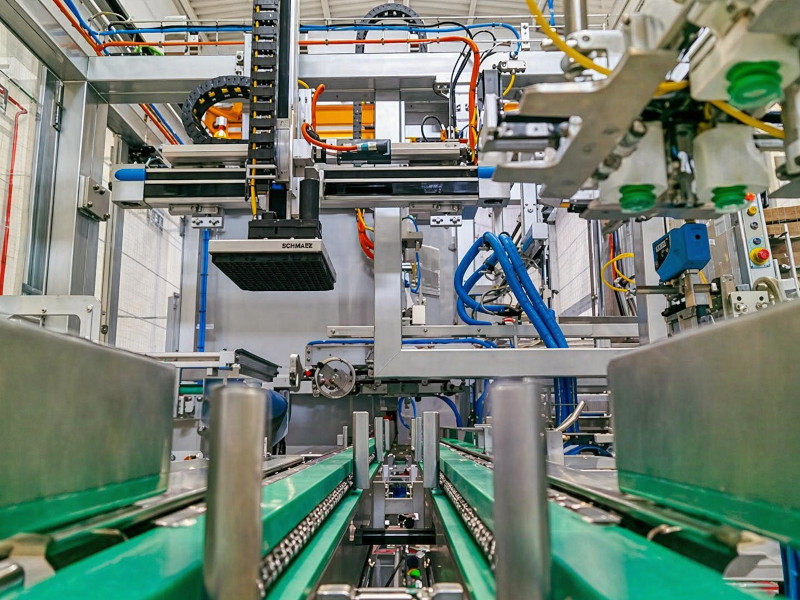
One of the two applications due to be shown is a complete packaging line built around a high-speed robotic picking cell and a cardboard tray erector with dividers. According to ATP Packaging, the line is designed as an alternative to conventional plastic trays. The robotic section uses vision-guided Delta robots to pick, stack and place piles of biscuits into the trays, combining product handling and carton-based packaging in a single integrated solution.
The second system is a compact case packing line intended for jars packed into Packmaster-type trays with lids. ATP Packaging said the line is configured as a top-load case packer in which trays are formed from cardboard blanks before products are loaded. The packs then pass through a closing station that forms the lids, also from blanks, before placing and sealing them onto the loaded trays.
Taken together, the two applications position ATP Packaging around end-of-line integration rather than a single machine offer. The systems described by the company combine several stages of packaging preparation and loading, including blank forming, robotic handling, tray erection, product insertion and final closure. That approach is likely to resonate with manufacturers seeking more compact and coordinated packaging lines, particularly where format consistency and reduced manual intervention are priorities.
The biscuit line also points to continued industry interest in replacing plastic transport or display formats with fibre-based alternatives where product stability and line performance can still be maintained. In ATP Packaging’s description, the use of cardboard trays with dividers suggests a format intended to preserve stacking order while supporting automated loading at speed.
Meanwhile, the compact case packing application reflects demand for equipment able to manage shelf-ready or distribution-ready tray-and-lid formats from flat blanks. By integrating tray formation, loading and lid application in one line, the system is aimed at producers that need a tighter footprint while retaining a fully enclosed final pack format.
ATP Packaging said it plans to use the event to meet manufacturers interested in discussing packaging line requirements and broader production needs. The company invited visitors to contact its sales team to arrange meetings during the show.
With both applications centred on carton conversion and automated product placement, ATP Packaging’s Interpack presentation will be focused on practical end-of-line execution, particularly in areas where robotic handling and paper-based pack formats increasingly intersect.