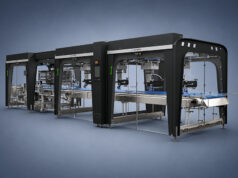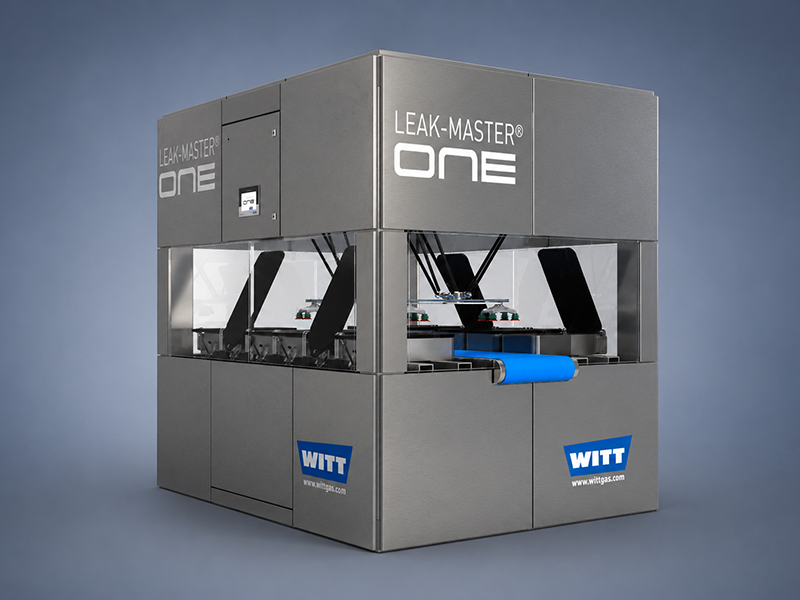
WITT Gasetechnik has introduced the LEAK-MASTER ONE, an inline leak testing system designed to inspect individual modified atmosphere packaging (MAP) at high production speeds.
The system is intended to address one of the persistent quality-control challenges in food packaging: small leaks that gradually compromise the protective atmosphere inside MAP packs, leading to quality loss, customer complaints and avoidable food waste.
According to the company, the LEAK-MASTER ONE is integrated directly into the MAP packaging line and tests products one by one. It uses a CO₂-based vacuum testing method with infrared sensors to detect micro-leaks relevant to industrial applications.
WITT said the system has a detection threshold of around 10 micrometres, allowing it to identify leaks that may not cause immediate visible failure but can affect product quality later in the supply chain.
The machine is designed to inspect up to 120 packages per minute. This is achieved through twelve mini vacuum chambers operating in parallel, which are loaded automatically using pick-and-place robotics.
By combining high sensitivity with full-speed inline operation, WITT said the LEAK-MASTER ONE addresses a previous trade-off in leak testing, where processors typically had to choose between slower, more sensitive methods and faster systems with lower accuracy.
A central feature of the system is package-level traceability. Each pack is tested individually, with leaks detected and documented on a product-by-product basis. This allows defective packs to be removed from the production line without requiring broader batch rejection or extensive follow-up checks.
For food manufacturers, the company said this can reduce unnecessary waste, support higher output and help meet retailer quality requirements by preventing defective packaging from reaching the market.
The LEAK-MASTER ONE is suitable for almost all CO₂-containing MAP formats, excluding applications with high oxygen content above 20.9%. Target applications include meat and cheese products, convenience foods, fresh ready meals, baked goods and other MAP-packed foods requiring high process reliability.