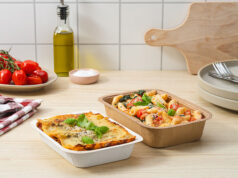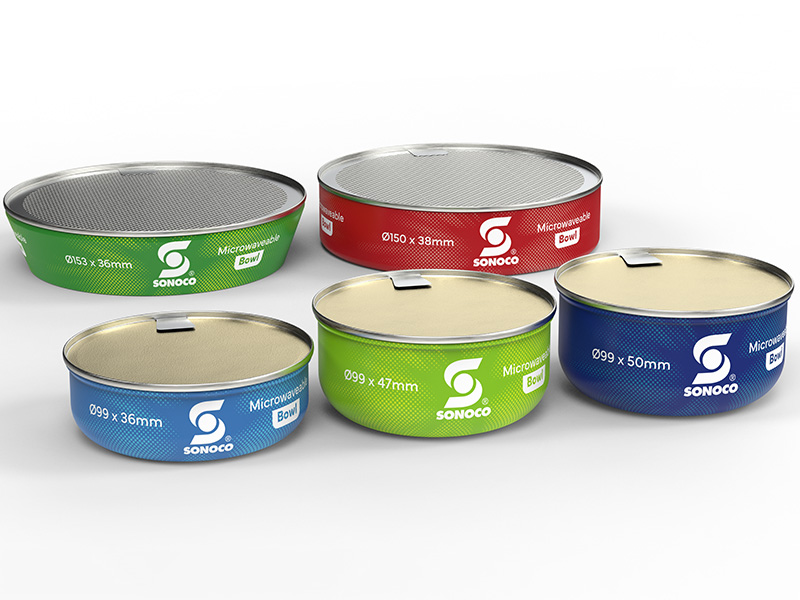
Sonoco used Interpack 2026 to spotlight microwaveable metal packaging as a central part of its strategy to help brands adapt to tightening European recyclability requirements, positioning its AFNOR-certified metal bowls as a circular alternative to conventional plastic ready meal trays.
As the European Union’s Packaging and Packaging Waste Regulation (PPWR) raises pressure on brands to simplify packaging structures and improve recyclability, Sonoco said demand is accelerating for packaging formats built around materials already recycled at scale. Against that backdrop, the company placed particular emphasis on its microwaveable metal bowls, which are designed to combine convenience with high recyclability.
The AFNOR-certified bowls were presented as a response to growing scrutiny of plastic tray formats, particularly as food brands face mounting challenges around recycled content requirements and the continued sorting limitations affecting some black plastic packaging. Sonoco said the new solution offers ready meal producers a practical route toward regulatory alignment while preserving consumer expectations around convenience.
By enabling microwaveability in metal packaging, Sonoco is targeting a segment traditionally dominated by plastic trays, seeking to reposition metal as a viable format for convenience-led food categories while also leveraging the material’s established recycling infrastructure.
Beyond ready meals, Sonoco’s broader Interpack portfolio reinforced its push toward circular material systems. The company also introduced CapOnCan, a mono-material resealable steel can designed as a lighter alternative to glass jars for categories such as family-size food packs and pet food. Sonoco said the format could reduce costs, improve supply efficiency and lower EPR fees in some markets.
In paper packaging, Sonoco highlighted continued expansion of GreenCan®, its paper-based packaging format made with up to 98% paper content using 100% recycled paperboard. The company showcased applications in dry food, including coffee and sugar, as brands increasingly seek to replace unnecessary plastic components.
Additional paper developments included a multi-purpose paper membrane designed to replace plastic sprinklers, while Sonoco also used the show to promote Orbit™, its easy-open metal end technology for glass jars, which the company said cuts opening force by 50%.
However, the microwaveable metal bowl launch stood out as Sonoco’s clearest signal of where it sees immediate packaging transformation opportunities: replacing problematic plastic formats in convenience food with solutions better positioned for future regulation.
From Sonoco’s perspective, the shift is increasingly less about isolated packaging innovations and more about helping brands redesign portfolios around scalable circularity, particularly as August’s regulatory changes approach.