European research initiative PLASRECO is developing PFAS-free functional coatings for use in paper-based packaging, positioning atmospheric plasma technology as a viable alternative to conventional fluorinated treatments increasingly restricted under EU regulation.
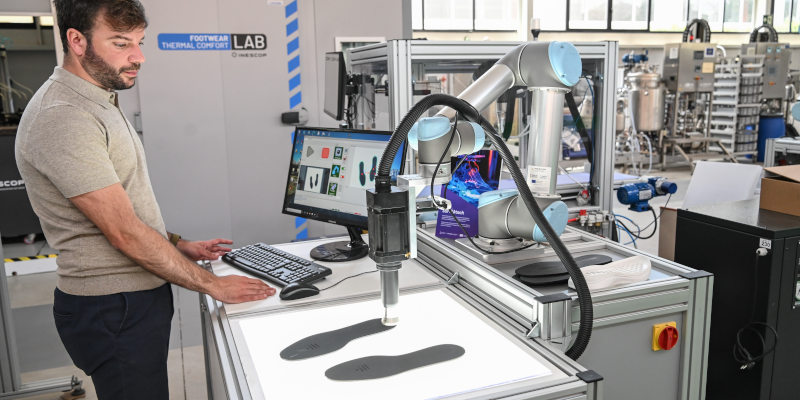
The project focuses on replacing PFAS-based coatings commonly used to deliver liquid repellence, stain resistance and non-stick performance in packaging materials, while maintaining the technical properties required for food-contact applications. Rather than relying on fluorinated chemistry, PLASRECO is developing silicon-based functional coatings applied through atmospheric plasma, a dry surface-treatment process that deposits ultra-thin layers with significantly reduced chemical input.
The initiative is led by Inescop and AIMPLAS, with industrial validation involving companies from packaging, textiles and leather. Among them is Lisart, which produces paper packaging for food applications.
Plasma coatings for paper substrates
According to the project partners, atmospheric plasma allows functional coatings to be applied to porous and flexible substrates such as paper, making the technology particularly relevant for fibre-based packaging seeking alternatives to PFAS treatments.
“Atmospheric plasma technology allows us to apply functional coatings to different surfaces, reducing the use of chemicals and improving the sustainability of the process,” said Víctor Serrano, researcher in Advanced Materials and Adhesives at Inescop. He added that compatibility with materials such as paper “opens up new possibilities for industrial sectors that are looking for alternatives to PFAS without compromising performance.”
The coatings are based on newly designed organosilicon monomers engineered specifically for plasma application. The objective is to ensure that treated materials retain durability and stability under industrial conditions, including exposure to abrasion, humidity and temperature variation—key performance criteria for food packaging.
Aligning with EU regulatory pressure
PFAS compounds are currently under intense regulatory scrutiny in the European Union due to concerns over environmental persistence and toxicity. For packaging producers, especially those supplying foodservice and takeaway applications, the search for compliant barrier solutions has become increasingly urgent.
AIMPLAS researcher Blai López said the project aims to combine performance and regulatory compliance. “Our challenge is to design specific silicon-based monomers that, when combined with plasma, will enable us to obtain durable, resistant, and environmentally friendly coatings. PLASRECO represents a firm step towards the elimination of hazardous substances in industry, in line with European regulatory requirements.”
Industrial relevance for packaging
Beyond laboratory research, PLASRECO is structured to support industrial transfer and scalability, with participating companies providing materials, technical input and process validation. For paper packaging producers, the approach offers a potential route to achieving water and grease resistance without multilayer plastic structures or fluorinated chemistries.
The project is funded by the Valencian Institute of Competitiveness and Innovation (IVACE+i) through ERDF support and runs as a collaborative R&D programme within the Valencian Community. Its outcomes are expected to contribute to improved regulatory compliance and competitiveness for packaging manufacturers facing tightening chemical restrictions across Europe.