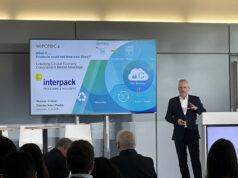
Packaging is increasingly being judged not by its appearance or shelf impact, but by its measurable performance across supply chains, recycling systems and regulatory frameworks, according to Sema Tezel Basbug, Head of Marketing at London Packaging Week.
As sustainability requirements tighten and legislation such as the EU’s Packaging and Packaging Waste Regulation (PPWR) moves closer to implementation, packaging development is becoming a multidisciplinary exercise that extends far beyond design aesthetics.
“Packaging is increasingly understood as the outcome of interconnected decisions, including material, structure, logistics, storytelling and end-of-life, all compressed into a single measure of value,” Tezel Basbug said.
The shift reflects a broader transformation taking place across the packaging industry, where environmental impact, operational efficiency and regulatory compliance are increasingly shaping decisions at the earliest stages of product development.
According to Tezel Basbug, packaging design has undergone a fundamental reversal in recent years. Rather than beginning with creative expression and adapting to technical requirements later, development processes are increasingly influenced from the outset by material availability, recyclability requirements, infrastructure limitations and lifecycle considerations.
“Good design now begins with engineering consequences across systems that do not pause for creativity,” she said.
This changing environment is forcing companies to evaluate packaging as part of a wider system rather than as a standalone product. Material choices can influence collection and recycling rates, while structural design affects transportation efficiency, emissions and compliance with emerging regulations.
The growing availability of data is also reshaping how packaging performance is measured. Companies are under increasing pressure to demonstrate how their packaging performs under real-world conditions rather than relying on theoretical recyclability claims or laboratory-based assessments.
As regulators, retailers and consumers demand greater transparency, evidence-based decision-making is becoming a central feature of packaging development strategies.
At the same time, sustainability is increasingly being viewed as a driver of innovation rather than a limitation on creativity.
For much of the past decade, sustainability initiatives were often perceived as constraints that restricted design options. Today, however, advances in materials science and circular economy solutions are creating new opportunities for packaging developers.
Emerging bio-based, biodegradable and circular materials are expanding the range of solutions available to brand owners while helping address environmental objectives and regulatory expectations.
The result is a shift in focus from adding features to eliminating unnecessary components, reducing material use and designing products that function effectively within existing waste management systems.
Innovation itself is also evolving. Rather than being driven by individual technological breakthroughs, progress increasingly depends on collaboration between material suppliers, packaging manufacturers, designers, brand owners and regulators.
This collaborative approach is becoming essential as companies attempt to balance sustainability targets, cost pressures, consumer expectations and technical performance requirements.
Regulation is playing an increasingly influential role in that process. Frameworks such as PPWR and Extended Producer Responsibility schemes are introducing new design constraints while simultaneously creating incentives for innovation.
These requirements are encouraging companies to rethink long-established packaging formats and explore new approaches that improve recyclability, reduce environmental impact and deliver measurable performance improvements.
Despite these advances, Tezel Basbug acknowledges that there is no universal solution to sustainable packaging.
Instead, companies must make informed trade-offs based on the specific requirements of individual products, brands and markets.
The industry’s challenge is no longer simply determining what packaging is made from, but understanding how it performs within the systems that surround it.
As packaging becomes increasingly intertwined with environmental targets, operational efficiency and regulatory compliance, success will be measured by outcomes rather than intentions.
These themes are expected to feature prominently at London Packaging Week, which will take place on 16–17 September 2026 and bring together stakeholders from across the packaging value chain to discuss the future direction of the industry.