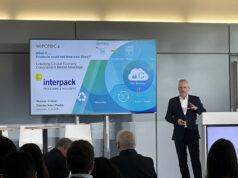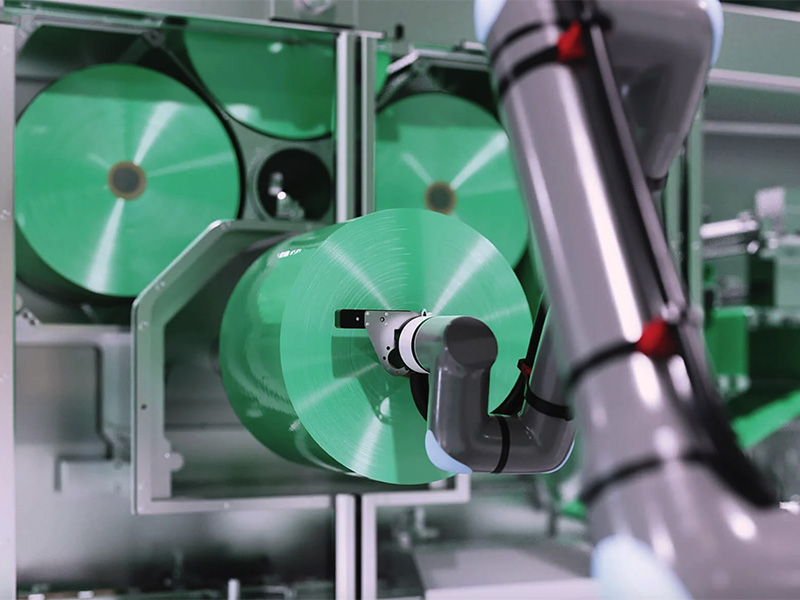
Syntegon is using interpack 2026 to present a broader “Factory of the Future” concept, positioning itself as a lifecycle partner across food and pharmaceutical manufacturing rather than focusing solely on individual machine innovations.
The Stuttgart-based company said it will showcase a combination of automation, robotics, digitalisation and AI-enabled systems designed to address rising cost pressure, labour constraints and tightening regulatory requirements across production environments.
According to the company, the concept centres on creating “self-regulating” operations supported by AI-assisted human oversight, with the objective of improving efficiency, flexibility and sustainability across entire production systems.
“At interpack, we demonstrate the power of our COCREATE and COSUCCEED concept. Game-changing innovations, jointly developed with pioneering customers, deliver greater business impact,” said Torsten Türling, CEO of Syntegon.
He added that the company’s innovation portfolio spans both food and pharmaceutical applications, with “neXt and SVX” targeting food production, while “SynTiso sets a new standard as a first-of-its-kind high-speed gloveless liquid pharmaceutical filling line.”
While neXt has already been positioned as a system-level architecture for food packaging operations, Syntegon is expanding its interpack message to include additional platforms addressing different operational constraints.
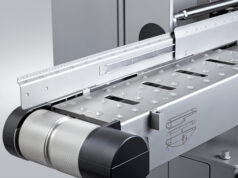
The SVX vertical packaging system is presented as a high-speed solution aimed at improving throughput and material efficiency. The company states that the platform can reach speeds of up to 300 bags per minute while enabling fast format changes and reducing packaging material consumption through patented technology. Its compact footprint is also intended to increase productivity per square metre without requiring facility expansion.
In parallel, Syntegon is targeting pharmaceutical and biotech manufacturers with its SynTiso platform, developed in collaboration with two unnamed pharmaceutical companies. The system uses gloveless isolator technology and fully robotised handling, including contactless container transport, to minimise human intervention in sterile environments.
The company positions this approach as a response to increasingly stringent regulatory requirements for injectable drug production, where contamination risk and process consistency are critical. According to Syntegon, the system enables faster changeovers and higher output per batch while supporting compliance at what it describes as “benchmark level.”
Across both sectors, the company is linking equipment innovation to a wider lifecycle services model. This includes engineering support at the design stage, project execution, field service and ongoing system upgrades based on data analytics.
Syntegon argues that this lifecycle positioning is becoming central to investment decisions, as manufacturers look to extend asset value, improve uptime predictability and adapt to evolving production and regulatory requirements over time.
Türling said the company’s role as a strategic partner combines “innovation leadership with best-in-class lifecycle services as the ultimate enabler for our customers’ growth.”
The presentation at interpack reflects a broader industry shift away from isolated machine performance toward integrated, data-enabled production environments. By combining packaging platforms, automation concepts and service models under a single framework, Syntegon is aligning its offering with manufacturers seeking more resilient and adaptable operations across both food and pharmaceutical production.