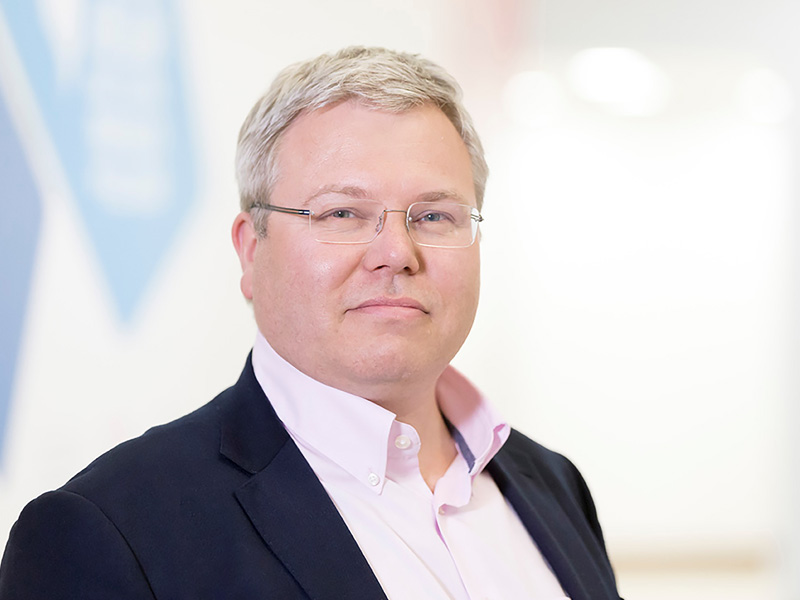
Sebastian Munden, Chair of WRAP and former Chief Executive of Unilever UK & Ireland, will highlight the next steps for the UK Packaging Pact during a panel at London Packaging Week in October.
The Pact, which grew out of the UK Plastics Pact launched in 2018, set targets to cut unnecessary packaging, improve recyclability and develop reuse systems. While progress has been made, Munden stressed that work remains to be done, particularly on films and wrappers.
“I suppose I would say, without getting overconfident, it’s worth reflecting on the progress that has been made so far in taking a much more thoughtful approach to packaging – eliminating unnecessary materials, changing materials where it made sense, and really starting to focus on increasing reuse,” he told London Packaging Week. “A lot of progress has been made, and we know what the next steps need to look like. Working with governments across the UK and the reprocessing industry, we need to finish what we’ve started, especially on wrappers and films. The next big opportunity to reduce packaging costs and material use is to imagine the exciting innovation opportunities in reuse and refill.”
Munden pointed to lessons from reuse pilots but noted that scaling remains difficult. “It’s very hard to test at scale because one or two items in a category, or even more challenging, one or two items presented in an aisle outside that category, will never give you a full picture,” he said. WRAP is working with retailers to establish interoperability and practical solutions.
Consumer adoption is also key. “We weren’t born knowing how to shop in a supermarket, all behaviours are learned,” Munden said. “What we’re talking about here is helping people relearn behaviours, making it as easy and beneficial as possible, and treating this as commercial innovation rather than simply ‘doing good.’ It has to be attractive to shoppers and solve problems for them as well.”
With the Plastics Pact nearing completion, Munden underlined the progress and the gaps. “In the UK, two of the targets are nearly complete, and two need more work. The main focus now is on bags, films and wrappers. Under EPR, bags, films and wrappers will be collected at curbside in 2027. We need to ensure a clear path forward and that the necessary infrastructure is in place.”
He added that reuse models also help companies reduce Extended Producer Responsibility (EPR) fees: “One big lever to reduce packaging is refill and reuse because the same pack can be used multiple times. The benefits are reflected in EPR fees since they are paid only once when the pack enters the market.”
Looking ahead, Munden said the “future pact” will concentrate on delivery. “Now, for most big FMCG companies and retailers, those targets are already set. What we need now is to help everyone deliver them.”
He also stressed the importance of collaboration: “When collaboration brings together all parties with influence or a stake in the finished product, that’s always better. Ideas rarely transfer linearly or as planned, so events like London Packaging Week are valuable for the serendipity of ideas and people coming together.”
Munden will expand on these themes at London Packaging Week on 15 October, where he joins a panel with representatives from Tesco, WWF, GoUnpackaged and SUEZ.