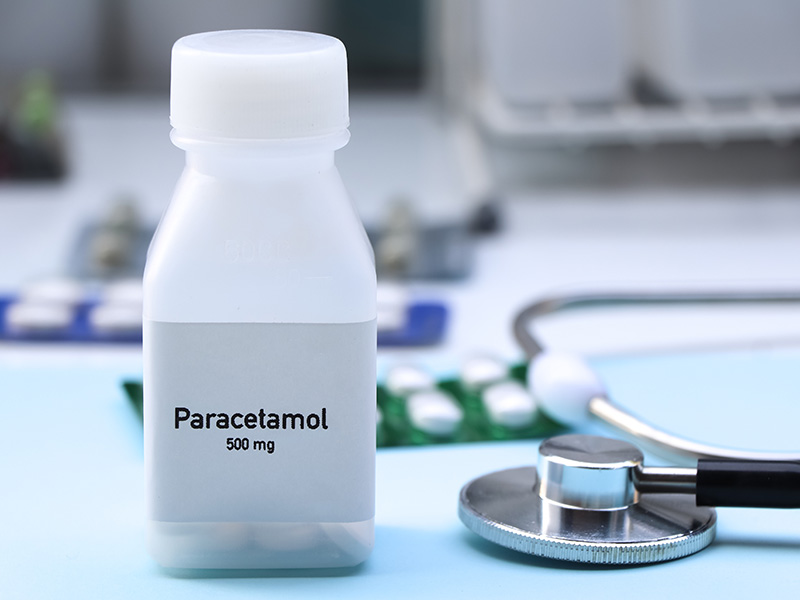
A new study from the University of Edinburgh has demonstrated a groundbreaking bioconversion process that transforms polyethylene terephthalate (PET) waste into acetaminophen (paracetamol), offering a dual environmental benefit by addressing both plastic pollution and fossil fuel dependence in pharmaceutical production.
In an innovative application of synthetic biology, researchers have engineered Escherichia coli bacteria to process degraded PET plastic into the widely used analgesic compound. The process, which has been detailed in the journal Nature Chemistry, offers a proof-of-concept for upcycling plastic waste into high-value pharmaceutical products.
“This work demonstrates that PET plastic isn’t just waste or a material destined to become more plastic – it can be transformed by microorganisms into valuable new products, including those with potential for treating disease,” said Stephen Wallace, a biotechnologist at the University of Edinburgh and lead author of the study.
The process begins with chemical degradation of PET bottles, yielding monomers that are then introduced to genetically modified E. coli. These bacteria catalyse a biocompatible version of the Lossen rearrangement – a reaction first identified by German chemist Wilhelm Lossen in 1872 – to convert intermediates into nitrogen-containing organic compounds. These compounds serve as the basis for synthesising acetaminophen.
Unlike traditional drug synthesis methods, which often rely on petrochemical feedstocks and energy-intensive steps, the new approach operates at room temperature and requires no excessive heating or cooling. According to the researchers, the system achieved a 92% yield within 24 hours using a compact laboratory setup.
Beyond the impressive efficiency, the researchers say the platform could potentially be adapted to handle other types of plastics or microbial hosts, paving the way for a new class of sustainable biomanufacturing technologies.
The implications for the packaging sector are particularly significant. PET is one of the most commonly used plastics in food packaging, beverage bottles, and consumer goods. Over 350 million tonnes of plastic waste are generated globally each year, with PET constituting a major fraction.
By establishing a viable chemical and biological route for converting this waste into pharmaceuticals, the study opens new avenues for circular economy models that integrate packaging, waste management, and pharmaceutical manufacturing.
“Nature has evolved an exquisite yet limited set of chemical reactions that underpin the function of all living organisms,” the authors wrote. “By contrast, the field of synthetic organic chemistry can access reactivity not observed in nature, and integration of these abiotic reactions within living systems offers an elegant solution to the sustainable synthesis of many industrial chemicals from renewable feedstocks.”
Although still at an early stage, the research underscores the potential for bioengineered systems to address environmental challenges while reducing industrial reliance on fossil resources. Scaling the process to commercial levels will be the next major hurdle, but the team remains optimistic about its broader applicability.
The study, “Biocompatible Abiotic Reaction Enables Bacterial Conversion of PET-Derived Substrates to Acetaminophen”, was published in Nature Chemistry in June 2025.