Barilla has outlined further progress in packaging circularity and water management, saying 99.8% of its packaging is now designed to be recyclable while the volume of water recycled and reused across its operations rose by 45% in 2024 compared with 2022.
The Parma-based food group tied the update to Global Recycling Day on March 18 and World Water Day on March 22, positioning the two areas as connected parts of a broader resource-efficiency strategy. The company said the measures are intended to support more sustainable production models, spanning both packaging design and the use of water in manufacturing and sourcing.
Water remains a strategically important resource for Barilla, particularly in pasta production and in sites where water availability is under greater pressure. The company said it is continuing to reduce water consumption in its production processes while expanding recovery, recycling and reuse practices in its plants and throughout the supply chain.
Barilla said its operations are managed under an Environmental Management System compliant with the UNI EN ISO 14001 standard and that it has long used Life Cycle Assessments for its products, including analysis of the Water Scarcity Index. That metric is used to assess water consumption against the availability of water in the region concerned. Water used at production facilities, sourced mainly from aqueducts, wells or surface waters, is continuously monitored for compliance with environmental regulations, while wastewater treatment systems are subject to strict controls intended to prevent pollution.
The company said each production site sets annual targets for reducing water consumption. These are monitored monthly through its Supply Chain Scorecard, a global platform used to track environmental performance indicators.
Barilla said progress in water recovery and reuse has become increasingly significant in recent years. In 2024, the total volume of water recycled and reused across the group increased by 45% compared with 2022. In water-stressed areas, the increase was more pronounced, reaching 164%.
A key part of that effort has been the Rubbiano plant in Parma, which produces sauces and pesto. According to the company, upgrades to wastewater treatment systems at the site enabled the recovery of more than 62,000 cubic metres of water between 2022 and 2024 through advanced recycling solutions.
The company said its water strategy also extends beyond the factory gate. It is working on a voluntary basis with tomato and basil suppliers to promote farming practices designed to use water resources more efficiently, linking manufacturing improvements with agricultural resource management.
Barilla said it plans to continue investing in water efficiency. At the Rubbiano plant, more than EUR 5 million is scheduled for investment under the Energy & Water Plan, part of a wider EUR 168 million programme launched in 2024. One of the stated targets is to raise the recycled water index by 250% in the most water-stressed areas by 2030 compared with 2022.
Alongside water, packaging remains one of the most visible areas of Barilla’s sustainability programme. The company framed packaging as both a waste issue and a source of production-related emissions, and said its approach is focused on maintaining product protection, reducing food waste and increasing the use of recycled materials.
Barilla said that more than half of the materials used in its packaging globally are recycled, while 71% of its packaging is based on paper or cardboard. It added that its Sustainable Packaging Principles, first introduced in 1997 and updated over time, continue to guide development work in this area.
The group has also set a target to remove around 4,000 tonnes of packaging material from the market by 2030 through redesign projects, indicating that lightweighting and material optimisation remain part of its longer-term packaging strategy.
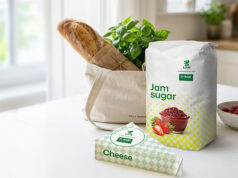
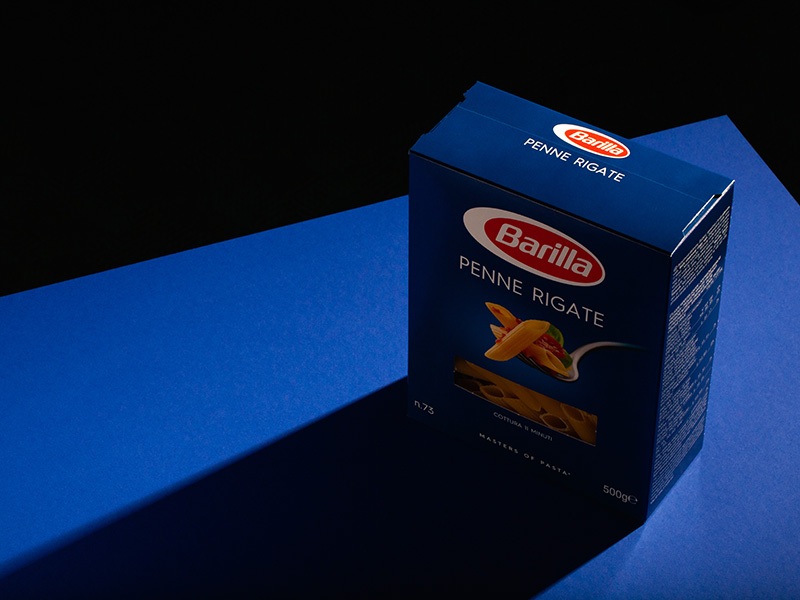
Barilla’s pasta packaging was presented as a central example of that work. The company pointed to its Blue Box format, which uses virgin fibre cardboard sourced from sustainably managed forests. It also highlighted the use of low-odour inks, which it said support recyclability in the paper recycling stream.
The update reflects a wider pattern across the food industry, where packaging redesign and water stewardship are increasingly being treated as operational priorities rather than separate sustainability initiatives. In Barilla’s case, the latest figures suggest the company is trying to show measurable progress in both areas while linking future investment to sites and supply chains exposed to greater environmental pressure.