Researchers at Monash University have developed a new class of natural plastics derived from food waste sugars, offering the potential to replace petroleum-based packaging materials with compostable alternatives.
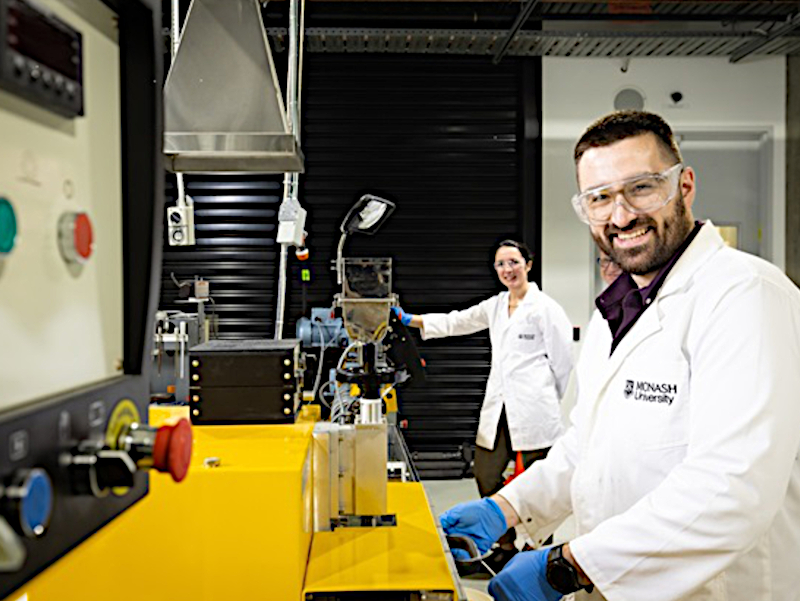
The study, led by Edward Attenborough and Dr Leonie van ’t Hag from the Department of Chemical and Biological Engineering, demonstrates how bioplastics known as polyhydroxyalkanoates (PHAs) can be designed for everyday use in food packaging, agricultural films, and medical applications.
With global plastic production now exceeding 400 million tonnes annually, the researchers explored how soil-dwelling bacteria could transform organic waste into plastics with properties similar to conventional polymers. By feeding Cupriavidus necator and Pseudomonas putida a carefully balanced mix of sugars, salts, nutrients, and trace elements, the team encouraged the microbes to produce natural plastic within their cells. These polymers were then extracted, processed into ultrathin films of about 20 microns, and tested for strength, flexibility, and melting behaviour.
“This research demonstrates how food waste can be transformed into sustainable, compostable ultrathin films with tunable properties,” said Attenborough. “The versatility of PHAs means we can reimagine materials we rely on every day without the environmental cost of conventional plastics.”
By comparing the stiffer material produced by C. necator with the softer, more flexible plastic from P. putida, the researchers showed how blending the two could tune performance characteristics such as crystallinity and melting point, while retaining strength and flexibility.
Dr van ’t Hag added that tailoring these natural plastics for different applications could open the door to biodegradable solutions designed for temperature-sensitive packaging, compostable food wraps, or medical films.
The team is now working with industry partners including Enzide and Great Wrap through the ARC RECARB and VAP hubs to explore commercial applications in packaging and healthcare. The work builds on earlier research that investigated the potential of PHA-based materials in drug delivery systems.